Back to Products
Mass Spectrometry
Tandem Quadrupole Systems
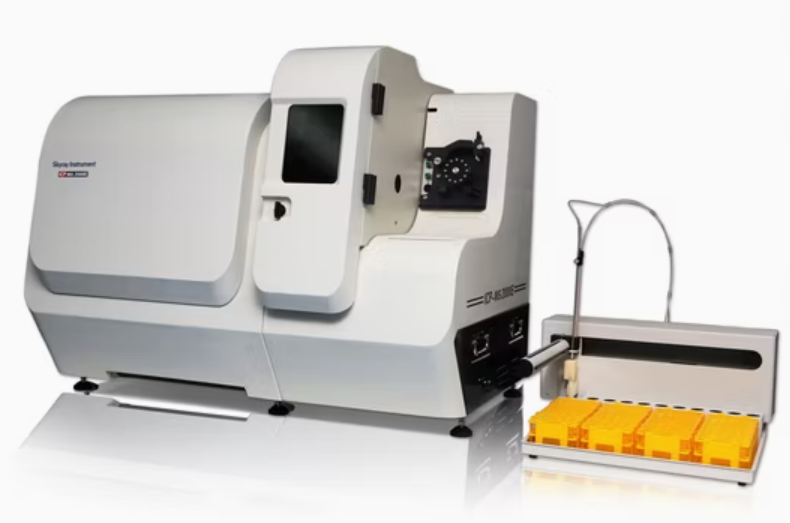
Aeromet II Tandem Quadrupole Mass Spectrometer
Advanced tandem quadrupole system with proprietary fast tag technology for enhanced trace-level detection
Product Overview
The Aeromet II represents the next generation of tandem quadrupole mass spectrometry, incorporating proprietary fast tag ionization and detection mechanisms that significantly enhance the instrument's ability to detect trace-level analytes within complex biological, environmental, or pharmaceutical matrices. This technology supports low-volume sample injections while maintaining high fidelity in signal acquisition, thereby ensuring reproducibility and precision in quantitation.
Key Features & Advantages
Discover what makes this system exceptional for your laboratory needs
Fast Tag Technology: Proprietary fast tag ionization and detection mechanisms significantly enhance the instrument's ability to detect trace-level analytes within complex biological, environmental, or pharmaceutical matrices. This technology supports low-volume sample injections while maintaining high fidelity in signal acquisition, thereby ensuring reproducibility and precision in quantitation.
Dynamic Range Optimization: The Aeromet II is equipped with Dynamic Range technology that extends the linear response range of the detector. This enables accurate quantification of both low-abundance and high-concentration species within a single analytical run, facilitating seamless method transfer and reducing the need for sample dilution or concentration. The instrument is designed for dual orthogonal for cone based sources which helps to remove neutral and sample matrix.
High-Speed Acquisition: The Aeromet II system supports elevated scan rates and rapid polarity switching, allowing for the simultaneous monitoring of multiple transitions with minimal cycle time. This capability is particularly advantageous in high-throughput workflows such as pharmacokinetic profiling, metabolomics, and targeted proteomics.
Reproducibility and Quantitative Confidence: The instrument's precision-engineered quadrupole filters and collision cell dynamics ensure consistent fragmentation patterns and transition reproducibility, which are critical for confident quantitation in regulated environments.
Enhanced Method Development: The intuitive Spera software environment supports real-time data visualization, automated peak integration, and customizable acquisition protocols. These features accelerate the optimization of analytical methods and improve the interpretability of complex datasets.
The instrument can be upgraded to a high-resolution mass spectrometry (HRMS) time-of-flight (TOF) system with ion mobility spectrometry (IMS), enabling mass measurements with up to four decimal places of precision. It offers an acquisition rate of up to 30 spectra per second and provides a mass resolution of greater than 60,000 for MS and MS/MS at m/z 1000. The system delivers a mass accuracy of 1 ppm and includes direct infusion capability. The instrument achieves a resolving power of more than 75,000, and the IMS and QTOF modes can be switched as required. The ion mobility separation provides an IMS resolution of greater than 40 Ω.
Instrument Specifications
Detailed technical specifications and performance parameters
| Parameter | Specification |
|---|---|
| Dual-orthogonal API sources | Yes |
| Mass analyzer | Quadrupole analysers (MS1/MS2) |
| Collision cell | MS/MS performance at high data acquisition rates |
| Ionization Sources modes | Multi-mode source – ESI & APCI, ESI Single Source, APCI Single Source |
| Flow Rate | flow rates up to 2 mL/min |
| Acquisition modes | Multiple reaction monitoring (MRM), Product ion scan, Precursor ion scan, Constant neutral loss, Full scan MS |
| Scan speed | Up to 22,000 Da/s |
| ESI and APCI source Flow rate range | 2.0 mL/ min |
| Mass Range (AMU) | 2 to 2000 m/z |
| Mass Stability | <0.1 Da over a 24 hour period |
| Polarity Switching time | 5 ms to switch between positive and negative ion modes |
| Desolvation Temperature | 700°C for both ESI and APCI Modes |
| Dwell and Delay Time | Less than 0.5 ms |
| (ESI+) MRM sensitivity | A 1 pg on-column injection of reserpine produces a signal-to-noise ratio exceeding 700,000:1 (LC flow rate 0.5 mL/min, MRM 609 > 195 m/z). The instrument detection limit (IDL), based on 10 replicate injections, is <2.0 fg reserpine. |
| (ESI-) MRM sensitivity | A 1 pg on-column injection of chloramphenicol produces a signal-to-noise ratio exceeding 700,000:1 (LC flow rate 0.5 mL/min, MRM 609 > 195 m/z). The instrument detection limit (IDL), based on 10 replicate injections, is <2.0 fg chloramphenicol. |
| MS to MS/MS switching time | 3 ms |
| Mass Resolution | Auto adjust (0.50 Da, 0.75 Da or 1.00 Da FWHM) |
| Number of MRM channels | 32,000 MRM channels |
| Acquisition Scan Modes | MS scanning, Product ion scanning, Multiple reaction monitoring, Selected ion monitoring/recording (SIM/SIR), Precursor ion scanning, Neutral loss/gain scanning, Advanced scan modes, IMS/MS/MS, DIA, DDA, IMS/MS/MS (CID/IMS, IMS/CID and CID/IMS/CID). |
| Collision Cell | Q2/MS2/CID |
| Dynamic Range | 6 order |
| Detector | EMT Detector |
| Integrated Auto-Tuning/Calibration device | Yes |
| Data Management System | Spera Software |
| MRM acquisition rate | 555 MRM |
| Vacuum system | One automated vacuum pump |
| Spera Software Interface | The Aeromet II is seamlessly integrated with the Spera analytical software suite, which enables dynamic switching between full scan MS and targeted MS/MS acquisition modes. This flexibility empowers analysts to simultaneously explore sample complexity and refine targeted quantitation strategies during method development. |